Why Looking in Your Own Mirror Isn’t Enough
The ASK and TELL framework that reveals what you can't see about yourself
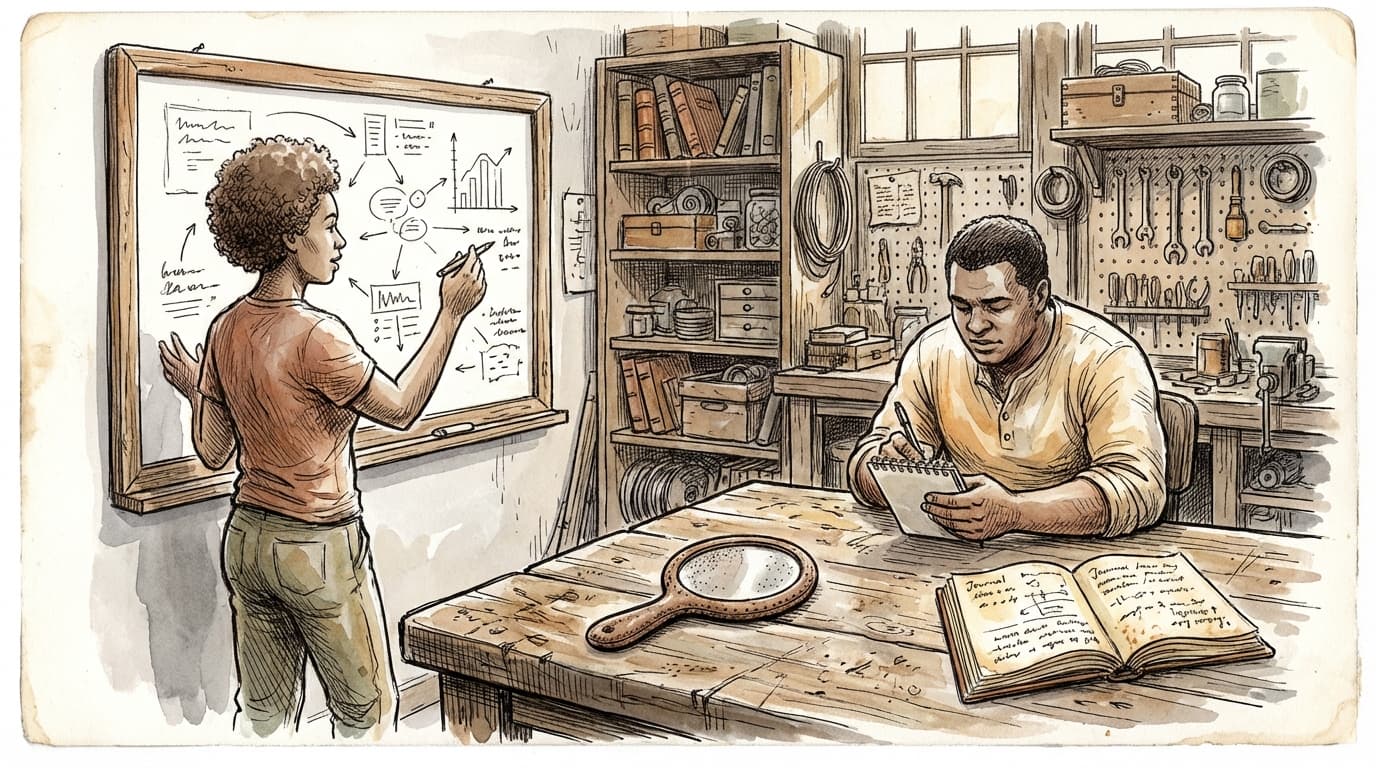
It was in my first year managing the browser engineering team at Prodigy when my boss pulled me aside after a team meeting. “Kelsey,” she said, “you’re assuming they understand this as well as you do.”
I was confused. Of course they understood. I’d just spent twenty minutes walking through the project requirements step by step. I’d been thorough, methodical, even drew diagrams on the whiteboard.
“But look at their faces,” she continued. “Half your team checked out around minute five. They’re nodding along, but they’re not following. You’re explaining this like you would to yourself, not to people who are hearing it for the first time.”
That stung. Not because she was wrong, but because she was so obviously right. I’d been so focused on being comprehensive that I’d completely missed the glazed looks, the polite nods, the lack of questions that should have been red flags. I thought I was being a thorough communicator. My team was experiencing something entirely different.
That moment taught me something uncomfortable: the things you most need to know about your leadership are usually the things you can’t see yourself. And if you’re waiting for annual reviews to figure out what those things are, you’re already too late.
The Problem with Only Looking in Your Own Mirror
Most leadership development treats self-awareness like a solo sport. We’re told to reflect, journal, take personality assessments. All useful, but they only give you access to what you already know about yourself.
Real self-awareness requires understanding your blind spots — the behaviors and patterns that others see but you don’t. Think about a small business owner who’s genuinely puzzled about why his team seems disengaged during meetings. He sees himself as collaborative and inclusive. His team sees someone who dominates discussions and rarely pauses for input. Neither perspective is wrong, but the gap between them is costing the team’s trust and performance.
You Have to ASK and TELL
The whole thing boils down to two simple but uncomfortable actions.
ASK means actively seeking feedback about how others experience your behavior, communication style, and impact. This helps you discover blind spots — the things you can’t see about yourself but are obvious to others.
TELL means strategically sharing your own insights, struggles, and growth areas. This moves information from your private world into open dialogue, creating trust and inviting others to be more honest with you.
I’m not talking about casual coffee chats here. These are intentional, sometimes squirm-inducing conversations designed to show you what you can’t see about yourself.
Four processes make this work:
Self Discovery is internal reflection to uncover your own patterns. Before you ask anyone else for feedback, spend time with a recent situation where something felt “off” but you couldn’t put your finger on why. What was your emotional state? What were you trying to achieve? How did others respond? This reveals specific blind spots to explore rather than fishing for generic feedback.
Self Disclosure is strategically sharing your struggles and growth areas. This builds trust and gives others permission to be honest with you. There’s an art to it — you want to show vulnerability without appearing uncertain. Not a therapy session. More like “here’s what I’m working on” in a way that makes it safe for others to be real.
Solicit Feedback is where most people get stuck. How do you ask for feedback that gets you honest, useful information instead of polite platitudes? The key is making your questions situation-specific and behavioral, not abstract. “How did that meeting land for you?” works. “Do you have any feedback for me?” doesn’t — it’s too broad and too threatening.
Outside Observation is creating space for others to share honest observations about your impact. This is the hardest one because you can’t control it. You can only create the conditions where it’s safe enough to happen.
The Confession That Changed How I Ask
I have to admit, I still need to work on this. Recently, I caught myself doing the exact thing my boss at Prodigy called out twenty years ago. I finished explaining something complex and asked “Any questions?”
Everyone stared back at me.
Dan Pink nailed why this doesn’t work. When you ask “Any questions?” you’re basically inviting people to publicly announce that they’re confused or uninformed. You’re asking them to volunteer for vulnerability in front of the group. Not exactly encouraging.
A better approach: “That was probably a little confusing — should I dig in more?” Now you’re giving them permission to be human instead of making them admit they don’t get it. You’re doing the TELL part — acknowledging that your explanation might have been imperfect which makes the ASK part safe enough to actually produce honest answers.
That’s the whole framework in one moment. You share your own imperfection (TELL), which makes it safe for others to share what they’re actually experiencing (ASK). The vulnerability isn’t weakness. It’s the mechanism that makes feedback possible.
Start with One Conversation
Don’t wait for annual reviews to understand your impact. Start with one area where you suspect you have blind spots and one person who already has goodwill toward you. Prepare what you want to share about your own growth area — something specific, not a grand confession. Then ask them a question specific enough to answer honestly: “In that project kickoff last week, did I leave enough room for the team to push back?”
The uncomfortable truth I started with becomes a competitive advantage. When you can see your blind spots clearly, you can address them before they derail important relationships or decisions. When you can’t see them, they compound silently until they become much bigger problems.
Your biggest growth opportunity is probably something you can’t see yet. Twenty years after that moment at Prodigy, I’m still catching myself explaining things like I would to myself instead of to the people actually listening. The difference is I’ve learned to build systems that show me when it’s happening — instead of waiting for someone to pull me aside.
Kenzie Notes
Analog wisdom for a digital world
A weekly page from The Workshop — frameworks, stories, and practical thinking on leadership, systems, and the craft of building things that matter. Wednesdays.