Why You Have to Put the Work In
The thing that will separate you from equally talented people isn't a secret. It's the work you do when no one's watching and no one's asking.
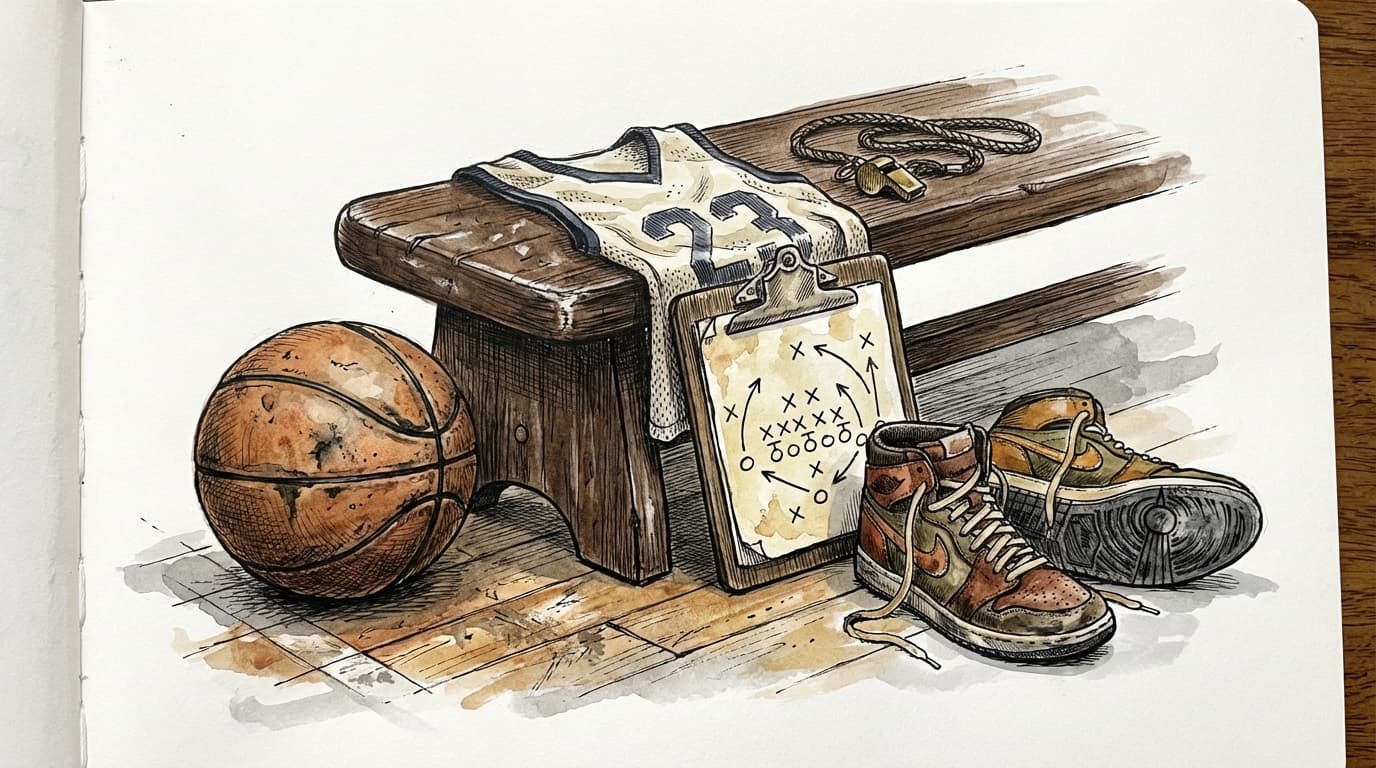
“I crack up,” Jeff Van Gundy said. “Players, when they’re losing, say, ‘I don’t understand why we’re losing. We got a lot of talent.’ Obviously, if you’re one of the top 400 in your profession in the whole world, you have a lot of talent. Obviously. Unfortunately, so does the competition. So what separates teams is not talent, it’s habits.”
He went on to list what actually loses games. Turnovers, bad shots, poor containment of the ball, not helping on defense, not rebounding, lack of poise under pressure. Then the line that stuck with me: “Not one of them is decided in this league on talent. I don’t understand this obsession with talent.”
That was a Houston Chronicle interview from October 2004. I’ve been thinking about it for twenty plus years.
Once, after speaking at a conference, a young designer approached me. He was about to graduate and wanted career advice. “I feel like I have the basics down,” he said. “How do I use my talent to become a great designer?”
I told him he just had to do more design.
We talked for a few more minutes, but he kept steering back to his portfolio and learning more tools. I don’t think he heard what I was actually saying. He was focused on the inputs that looked like progress — a better portfolio, a new tool, a shinier resume. What I was trying to tell him is that the thing that would separate him from every other talented designer graduating that year was volume. Just do more design. The craft develops through the doing, not through the preparing to do.
I wish I’d had the Van Gundy quote ready. It would have saved us both some time.
The Pattern I Keep Seeing
I’ve never been the kind of manager who asks people to work beyond what the company expects. If the day is 9 to 5, I mean 9 to 5. I don’t romanticize overwork and I don’t reward performative busyness.
But without fail, the people I’ve watched excel over the years — and this goes back to high school for me, not just my professional career — are the ones who put in the work to improve their craft when no one requires it.
Think about anyone you know who learned to program. Most of that learning didn’t happen in a classroom. It happened at home, building side projects, breaking things and fixing them on a Saturday afternoon because they wanted to understand how something worked. The class gave them the foundation. The unstructured hours gave them the skill.
A lot of the design ability I developed didn’t come from work assignments. It came from making flyers for people. Redesigning things that didn’t need redesigning. Practicing outside the hours because the repetitions at work weren’t enough to get where I wanted to go.
This isn’t about grinding or hustling or any of the language that makes it sound like a lifestyle brand. It’s unglamorous. Nobody sees it. There’s no audience for the Tuesday night you spent figuring out something that nobody asked you to figure out.
But I’ve seen this pattern play out with enough employees, colleagues, friends, and in my own career to know it stands the test of time. The people who separate themselves are rarely the most naturally talented in the room. They’re the ones who kept working on the craft when the workday was over and no one was keeping score.
The Myth of Overnight Success
Everyone wants to talk about the arrival. Nobody wants to talk about the road.
We see someone’s success and assume it appeared. We don’t see the years of effort and failure that built the foundation underneath it. The myth of overnight success ignores the most important part of the story: there’s a lot of failure, a lot of unglamorous repetition, and a lot of showing up before you get to the part anyone notices.
Van Gundy saw it in basketball. The teams that won weren’t more talented. They had better habits. They did the boring, fundamental things consistently when the spotlight was elsewhere.
The same thing is true in every field I’ve worked in. The world is constantly evolving. New tools, new platforms, new expectations. And the thing that stands between anyone and their goal is understanding that you can’t expect above average results from an average effort.
That’s not a motivational poster. It’s just what I’ve observed. The people who invest in themselves when they don’t have to are the ones who are ready when an opportunity shows up. Not because they got lucky. Because they’d been preparing for something they couldn’t see yet.
The Work That No One Sees
You can’t think your way to success. You can’t portfolio your way there either. You get there by doing the work, most of it invisible, most of it uncompensated, most of it driven by nothing more than wanting to be better at the thing you do.
That young designer at the conference was talented. I have no doubt about that. But so was every other designer graduating that year. The question was never whether he had enough talent. The question was what he’d do with his evenings.
Kenzie Notes
Analog wisdom for a digital world
A weekly page from The Workshop — frameworks, stories, and practical thinking on leadership, systems, and the craft of building things that matter. Wednesdays.