You Never Read The Same Book Twice
Businesses obsess over touchpoints. Customers remember stories. This is why you can nail every moment and still lose the relationship. Learn what cognitive science says to do instead.
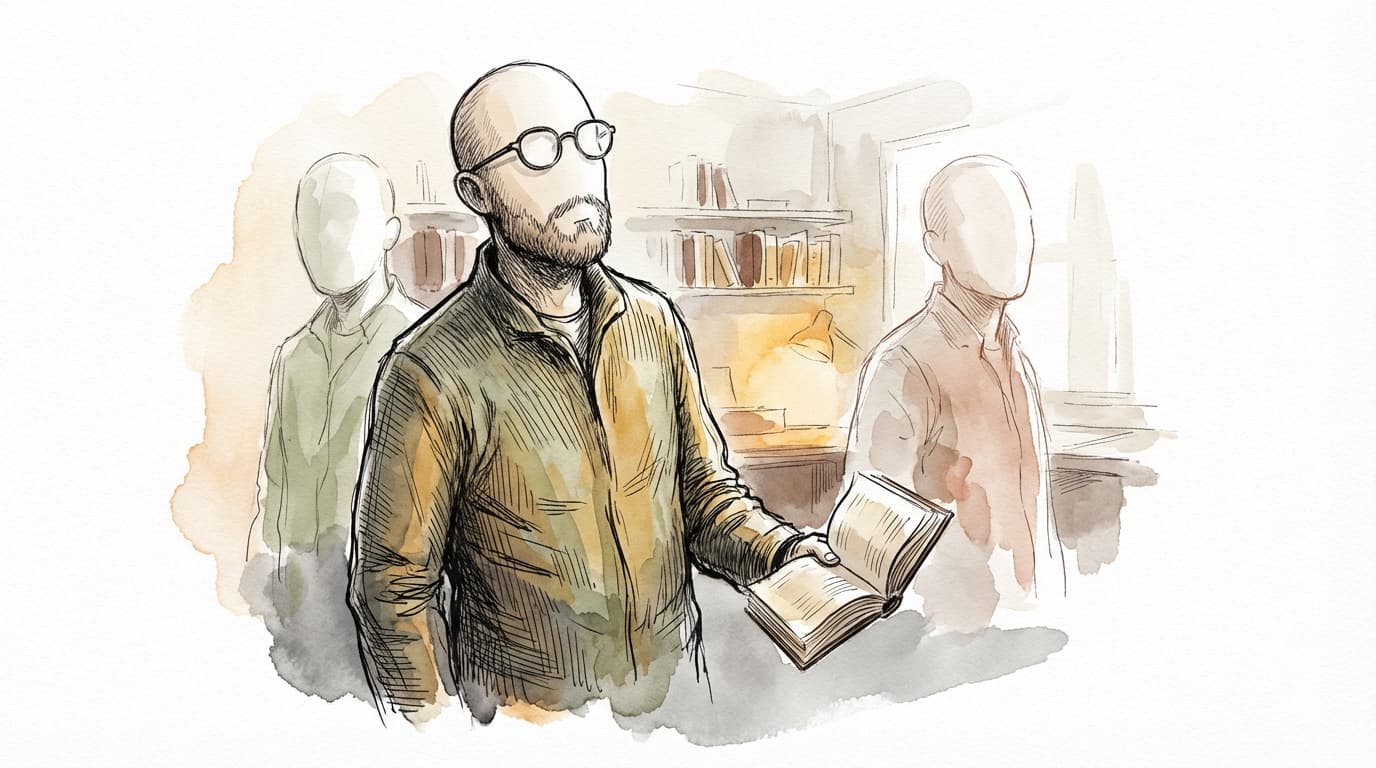
I once had a mentor tell me that you never read a book twice. The words on the page stay the same, but you don’t. Every time you return to a book, you bring a new set of accumulated experiences, shifted beliefs, and a different emotional context. The book in your hand is just an object. What you take away from it is the synthesis of that text and whoever you are in that moment.
I’ve been thinking about what that means for business and the experiences we create for users and customers.
Because if this can be true for books, it can be true for every interaction a customer has with your company. The product doesn’t change between visits. Neither does your meticulously crafted website. But the customer does. Every minute, every hour of every day they are changing invisibly in ways that have nothing to do with your company or product. And yet everything they bring to that next interaction becomes part of what they experience.
I don’t know many businesses that are accounting for that. They treat the customer as a receiver. Someone the experience happens to. But that’s not how human experiences work. Understanding why changes what it means to build something worth returning to.
Remembering: The Past Is An Imperfect Recorder
Let’s start with our memory and how we think it works, because most of us have it wrong. Have you ever gone back to a location or your old family home that you loved as a kid, and when you walk in, it’s nothing like you remember? The space hasn’t changed. You have.
That happens because we treat memory like a video recorder. We think that something happens, we record it, and later we hit play and retrieve what we stored.
Clean. Faithful. Accurate.
But in 1932, British psychologist Frederic Bartlett proved that’s not what’s happening. Through a series of experiments, he showed that remembering isn’t retrieval — it’s reconstruction. Decades later, cognitive psychologist Elizabeth Loftus made it harder to ignore. She demonstrated how easily memories can be altered, distorted, or entirely fabricated just by introducing new information after the fact.
Every time you recall a memory, you’re not replaying it. You’re rebuilding it, pulling fragments from the past and stitching them together using your current emotional state, context, and belief set. Memory isn’t a record of what happened. It’s an act of creation happening right now.
For business, this means something uncomfortable. The experience a customer had with you last month is not sitting in their mind intact, waiting to be retrieved. It’s being continuously reconstructed. Which means what they remember about you is shaped as much by who they are today as by what you actually did.
Seeing: The Present Is An Imperfect Camera
Memory is about the past. But the same construction is happening in the present. This is happening right now, in real time, every time a customer interacts with your business.
Most of us assume we experience the world like a camera. The inputs come in, the brain processes it, we see reality, perception follows. That’s the intuitive model. It’s also wrong.
What actually happens is what neuroscientists Karl Friston and Andy Clark call the predictive brain. In reality, your brain isn’t waiting for information to arrive before forming a picture of the world. It’s already running ahead of your senses. It tries to make its best guess about what’s out there based on everything it already knows. Including past experiences, current context, and what typically happens in situations like this one.
When sensory data arrives, your brain isn’t building a picture. It’s checking the one it already made. If reality matches the prediction, everything feels normal. If it doesn’t, your brain updates, and that update is what we experience as surprise, friction, or something feeling off. Anil Seth calls this a controlled hallucination. What you experience as reality is your brain’s best guess, continuously revised. You feel like you’re receiving the world. You’re actually generating it.
This should change how you build solutions and products for your customers. They don’t arrive at your product as blank slates. They arrive with a fully running predictive model that has been built from every prior experience with your brand, your category, and competitors. Your product either confirms those predictions and feels intuitive, or it violates them and creates friction.
The experience isn’t happening in your product. It’s happening in the gap between what the customer expected and what they found.
This means great experience design isn’t just about building good moments. It’s about deliberately shaping what customers learn to expect so that future interactions feel inevitable rather than surprising. You’re not just designing the present. You’re programming the predictions they’ll bring next time.
The Business Lesson
So what does any of this mean if you’re running a business?
If memory is reconstructive and perception is predictive, then the customer is never just experiencing a moment. They’re actively building meaning from it, using everything they remember about you, everything they expect from you, and everything they’re feeling right now. All of it happening simultaneously, mostly below the surface.
And what do most businesses do with that? They measure moments. An NPS score after a support call. A CSAT rating on a transaction. An A/B test on a landing page headline. Each one treated as a discrete, measurable event.
It’s not just that we’re scoring individual frames while the customer is watching a story. It’s worse than that. We’re scoring the frames while the customer is actively writing the story — and we don’t even know it.
A frustrating billing experience doesn’t just score low on CSAT. It becomes a chapter heading that reframes how the customer remembers every good experience that came before it. A genuinely helpful customer service call doesn’t just resolve a ticket. It rewrites the memory of the friction that caused it. Every interaction is raw material. The customer is always the author.
This is why you can optimize every individual touchpoint and still lose the relationship. And why you can survive individual failures if the overall pattern has built enough trust in the customer’s model of who you are (this also applies to leadership, but that’s a different article). In short, moments matter. But they matter as part of a story the customer is continuously writing — not as isolated scores on a dashboard.
The unit of analysis is wrong. Businesses are measuring frames. Customers are writing novels.
Business By Design
So the question worth asking isn’t “did we nail that touchpoint?”
It’s: what story is the customer writing about us right now? What material are we handing them? And is that material giving them something worth returning to?
That’s not a UX question. It’s not a customer service question. It’s a business design question. Understanding this will change what you pay attention to, what you measure, and where you invest.
It means that consistency across time matters more than perfection in a moment. That the feeling a customer carries out of an interaction is more important than the score they leave behind. It also means that every department that touches a customer: product, support, billing, marketing, or sales is a co-author of the experience whether they know it or not.
A practical place to start: don’t just ask customers how a moment felt. Ask them how their overall sense of you has changed over time. The difference between those two questions is the difference between scoring a frame and reading the story.
Let’s go back to where we started. You never read a book twice. The words stay the same. You don’t.
Your customers are reading you right now. They’ve been reading you for as long as they’ve known you. And every interaction you have with them is a new page. A page they’re writing, not just reading.
The question is whether you’re handing them good material.
Kenzie Notes
Analog wisdom for a digital world
A weekly page from The Workshop — frameworks, stories, and practical thinking on leadership, systems, and the craft of building things that matter. Wednesdays.