The Bottleneck Was Never Your Hands
What becomes possible when the only thing left is what you actually know
Everyone keeps saying AI won’t replace you. We say leaders who adopt it will outpace leaders who don’t. The gap is small now but will continue to compound fast. You have to move or fall behind.
Sure, all of that is true, but none of that is the conversation that we should be having.
Here’s the question nobody’s asking: what happens when the friction disappears and there’s nothing underneath it?
AI doesn’t make average judgment faster and call it wisdom. It doesn’t turn shallow thinking into depth. It doesn’t manufacture the pattern recognition that comes from years of paying attention. What AI actually does is remove the distance between what you’re capable of and what you can produce. If what you’re capable of is real, that’s extraordinary. If it isn’t, if what you’ve been selling is the appearance of depth, the speed just makes that visible faster.
The real risk isn’t that AI replaces you. It’s that AI reveals you.
A few weeks ago I started rebuilding kenzienotes.com. Not a template. A full publishing platform built on a headless architecture — WordPress running as a content engine on one server, a custom Next.js frontend running separately and pulling from it through a GraphQL API. Two systems that have to talk to each other, deployed across four different services, with none of the usual shortcuts. This is how publications like The Verge build. It’s not what you do when you just need a website up. On top of that architecture: a custom design system, six content types, newsletter integration, transactional email, analytics, spam protection, SEO/AEO work, and all the DNS configuration and deployment debugging that comes with coordinating services that weren’t designed to work together out of the box. The kind of project that, done the traditional way, would take a design team and a development team two or three months minimum.
While that was happening, I also built Brand Compass. A standalone product. A complete AI-powered brand development system with twelve specialist agents, an eight-phase discovery process, a five-layer memory architecture, and a React dashboard that visualizes the brand assembling in real time as each phase completes. Something a client could go through and walk away from with a finished brand identity, voice guide, and a full asset toolkit.
Both of these happened in the same two and a half weeks.
And here’s the part that really floored me: when I looked up at the calendar on February 20th, I assumed it had started in January. I went back and checked the records. The earliest discussion between Claude Code and me about architecture was timestamped February 5th.
My own brain filed it as over a month of work. It was weeks. That reaction, that disbelief when I looked at the dates, is more convincing to me than any argument I could make about what’s possible right now.
This was not a sabbatical. During those same weeks, I was doing my full-time job as Chief Product and Technology Officer at Hello Alice. We are building out our own AI system for small business. We’re running accelerator programs. We were preparing to launch our multi city Main Street AI Tour. The website and Brand Compass happened in the margins of all of that.
I need to be careful about how I tell this story, because the easy version is “look what AI can do.”
That’s not the story.
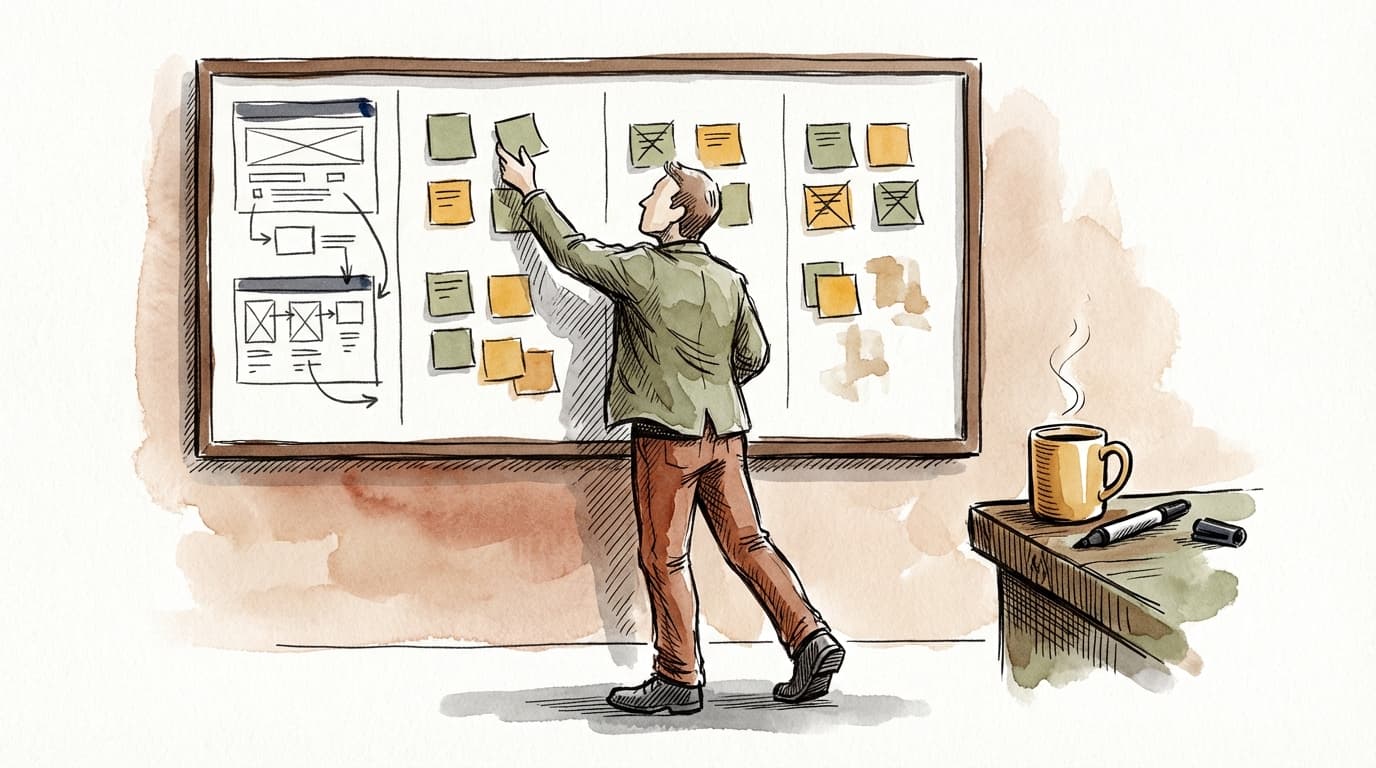
One of the later phases of the build was content migration. Not after the website was done. The content audit happened while I was building because I needed to see how everything fit together. That meant going through two years of writing and deciding what made the cut in real time, while the platform was still being assembled around it. Not based on what I liked, but based on whether it matched the brand system and worked for my audience. I had to be honest and ask myself what did each piece stand for? What was it actually about? Does this piece belong here, or did I just think it was good at the time?
The AI was building the house while I was deciding what was worth moving in. Simultaneously.
That’s the part nobody talks about. That judgment couldn’t be delegated. It required knowing what I was building toward, what I’d learned, what I’d outgrown. Twenty years of accumulated thinking about website technology, design, brand, systems, and what quality actually feels like — that’s what I brought to those two and a half weeks. That’s what the AI had to work with.
Someone without that foundation couldn’t have done this in the same time with the same tools. Not because they’d be slower. Because they wouldn’t know what to ask for, what to reject, or when something was wrong. The AI moved fast because I knew where I was going.
The bottleneck was never my hands. It was always my head. When AI removed the hand bottleneck, the head work became the only thing that mattered.
There are two things people talk about when they talk about AI adoption. Using it, and not using it. But that framing skips the more important question: what have you been building while you weren’t using it?
The professionals and leaders who will get the most from these tools aren’t necessarily the early adopters. They’re the ones who’ve been doing the slow work all along. Reading deeply. Developing genuine points of view. Building real judgment about their domain. Accumulating the patterns that make them hard to replace, not because they move fast, but because they think well.
That slow work doesn’t look productive. It doesn’t show up in a sprint review. It’s the practice of paying attention, the habit of asking why something actually works instead of just shipping the thing that worked. It’s cultivation. Farmers think in seasons. They don’t ask “how do I adopt better tools faster?” They ask “what am I growing, and is the soil actually ready?”
AI will not replace leaders who have done the real work. But it will make very visible, very fast, who has and who hasn’t.
That’s not a warning. It’s an invitation to ask the honest question before the tools ask it for you.
Are you worth amplifying?
Kenzie Notes
Analog wisdom for a digital world
A weekly page from The Workshop — frameworks, stories, and practical thinking on leadership, systems, and the craft of building things that matter. Wednesdays.
Related Ideas
The Friction Is Gone: Who Are You Without Your Tools?
Who were you before the tools? What AI is really exposing about how we work and who we've become
Context Over Control
People don’t resist direction. They resist absence of meaning. When you provide real context, you’re not giving up control, you're providing the material that makes control unncessary.
Six Future Skills That Make Learning Anything Easier
These human capabilities that help you learn, adapt, and thrive are essential to professional survival